
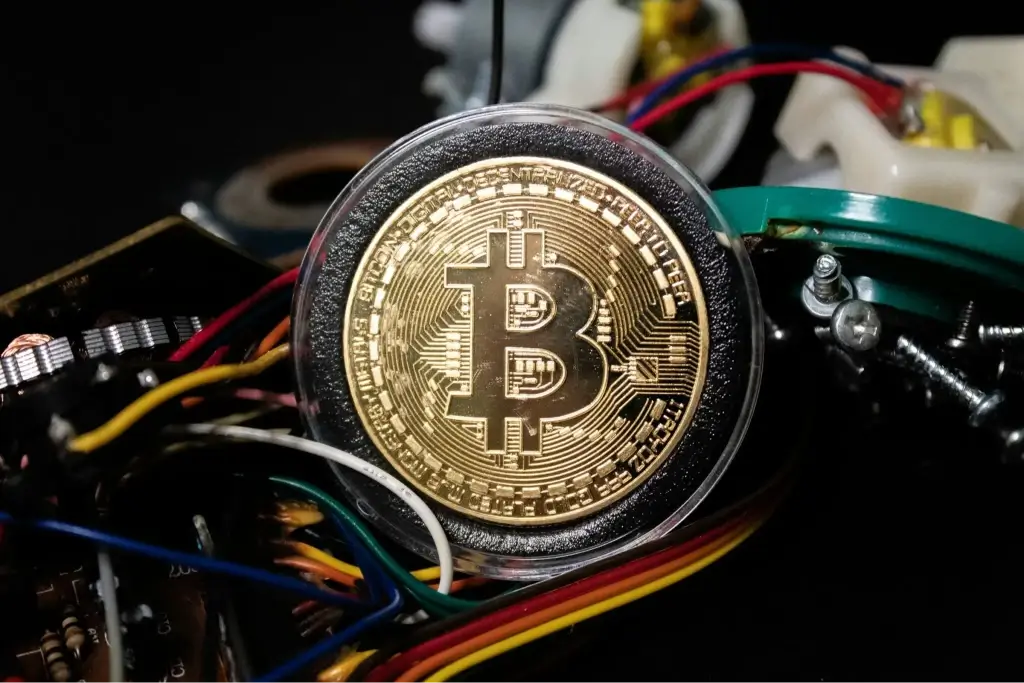
Bitcoin mining is the computational process that helps secure the Bitcoin blockchain, validate transactions and participate in the creation of new blocks. Miners use specialized hardware to perform SHA-256 calculations, compete under Bitcoin’s proof-of-work system and receive rewards when they successfully contribute to block production.
Unlike early Bitcoin mining, modern mining is no longer practical with ordinary desktop computers. The industry now relies heavily on specialized ASIC miners, efficient power infrastructure, mining pools and professional operating environments.
This guide explains Bitcoin mining from the fundamentals through hardware, economics, pools, cooling and profitability.
What Is Bitcoin Mining?
Bitcoin mining is part of the mechanism that allows Bitcoin to operate without a central authority controlling the transaction ledger.
Miners contribute computing power to the network. Their machines perform cryptographic calculations while attempting to produce a valid block.
Mining therefore serves several purposes:
- Secures the Bitcoin blockchain
- Helps process transactions
- Supports decentralized consensus
- Introduces new Bitcoin according to the protocol’s issuance rules
How Does Bitcoin Mining Work?
The process can be simplified into several stages:
- Transactions are broadcast to the Bitcoin network.
- Transactions are selected for inclusion in a candidate block.
- Miners construct candidate blocks.
- ASIC miners perform SHA-256 calculations.
- Miners compete to satisfy the network’s proof-of-work requirement.
- A valid block is accepted by the network.
- The successful miner or pool receives the applicable reward.
What Is Proof of Work?
Proof of work is Bitcoin’s consensus mechanism.
Instead of relying on a central organization to decide which transactions are valid, participants use computational work to compete for block production.
The system makes it computationally expensive to manipulate the blockchain, helping protect the network from certain forms of attacks and fraudulent history changes.
What Is a Bitcoin Mining ASIC?
ASIC stands for Application-Specific Integrated Circuit.
Bitcoin ASICs are specialized machines designed to perform the SHA-256 calculations used by Bitcoin mining.
Unlike a CPU or GPU, an ASIC is purpose-built for a specific computational task.
Modern Bitcoin mining therefore emphasizes:
- Hash rate
- Energy efficiency
- Reliability
- Cooling
- Uptime
- Power infrastructure
Bitcoin Miners AE describes ASIC miners as the primary hardware used for competitive Bitcoin mining and offers hardware from brands such as Antminer and Whatsminer.
What Is Hash Rate?
Hash rate measures the amount of computational work a miner can perform.
Bitcoin ASIC performance is commonly expressed in:
TH/s = terahashes per second
A higher hash rate means a miner performs more hashing calculations, but higher performance alone doesn’t automatically mean better profitability.
A miner with higher hash rate may also consume substantially more electricity.
That’s why miners should compare:
Hash rate + power consumption + energy efficiency
rather than hash rate alone.
What Is Mining Difficulty?
Bitcoin mining difficulty determines how difficult it is for miners to produce a valid block.
As more computing power participates in the network, the protocol adjusts difficulty to maintain Bitcoin’s target block-production schedule.
This creates an important business consideration:
More network competition can reduce the amount of Bitcoin attributable to a fixed amount of mining hardware.
Therefore, a profitability calculation made today can change later even if your ASIC performs exactly as expected.
What Is the Bitcoin Block Reward?
Bitcoin miners can receive rewards for successfully contributing to valid block production.
The reward structure includes newly issued Bitcoin and applicable transaction fees.
Bitcoin’s issuance schedule changes over time through programmed halving events. These events reduce the amount of newly issued Bitcoin included in the block subsidy.
For miners, this makes efficiency and operating costs increasingly important.
Why Is Electricity So Important?
Electricity is one of the largest recurring expenses in Bitcoin mining.
A miner operating continuously consumes power around the clock.
A simple calculation is:
Daily energy use = Miner power in kW × 24 hours
Then:
Daily electricity cost = Daily energy use × electricity rate
For a mining business, the calculation should also include cooling, infrastructure and other operating expenses.
What Makes a Bitcoin Miner Efficient?
Energy efficiency is generally expressed as joules per terahash.
For example:
J/TH = energy consumed to perform one terahash of hashing
A lower J/TH figure generally indicates that the ASIC performs hashing with less energy.
When evaluating hardware, look beyond the purchase price.
Consider:
- Hash rate
- J/TH
- Power draw
- Hardware price
- Expected operating life
- Cooling requirements
- Availability of spare parts
- Warranty and support
Bitcoin Mining Pools Explained
A mining pool combines the computing power of many miners.
Instead of waiting for one machine to independently find a block, participants contribute hash power to a collective operation.
Pool payouts vary according to the pool’s payment model and your contribution.
For beginners, a reputable pool can make mining income less unpredictable than attempting to mine alone.
Bitcoin Mining at Home
Home mining is possible, but it isn’t suitable for every household.
ASIC miners can produce:
- Significant heat
- Continuous noise
- High electricity demand
Before running an ASIC at home, assess:
- Electrical capacity
- Ventilation
- Ambient temperature
- Cooling
- Noise
- Internet reliability
- Safety requirements
A professional mining facility may be more appropriate when residential infrastructure is unsuitable.
Bitcoin Mining Hosting
Hosting allows miners to place their ASIC equipment in a dedicated facility instead of operating it themselves.
Potential advantages include:
- Professional power infrastructure
- Cooling systems
- Monitoring
- Maintenance support
- Reduced home noise
- Easier scaling
Bitcoin Miners AE provides hosting and related mining support as part of its UAE-focused mining services.
How to Evaluate Bitcoin Mining Profitability?
Bitcoin mining profitability should be calculated rather than assumed.
Important variables include:
- ASIC purchase cost
- Hash rate
- Energy efficiency
- Electricity rate
- Bitcoin price
- Network difficulty
- Pool fee
- Hosting cost
- Cooling
- Maintenance
- Hardware downtime
A useful approach is to calculate expected revenue first and then subtract all operating costs.
Estimated profit = Mining revenue − electricity − hosting − pool fees − maintenance − other operating costs
The result is only an estimate because mining conditions continuously change.
Is Bitcoin Mining Still Relevant?
Bitcoin mining has evolved from an activity accessible to hobbyists using ordinary computers into a specialized infrastructure industry.
Today’s competitive mining environment emphasizes:
- High-efficiency ASICs
- Low-cost energy
- Professional cooling
- Reliable uptime
- Operational monitoring
- Capital planning
That doesn’t mean beginners cannot participate. It means beginners need to approach mining as an infrastructure and economics problem rather than simply buying a machine.
FAQs
What is Bitcoin mining in simple words?
Bitcoin mining uses computing power to help secure the Bitcoin network and compete to produce valid blockchain blocks.
How does Bitcoin mining create revenue?
Mining revenue comes from applicable block rewards and transaction fees, distributed according to the miner’s successful participation and pool arrangement.
What hardware is used for Bitcoin mining?
Modern competitive Bitcoin mining primarily uses ASIC miners designed for SHA-256.
What is Bitcoin hash rate?
Hash rate is the speed at which mining hardware performs hashing calculations.
Does higher hash rate always mean higher profit?
No. Electricity consumption, hardware efficiency, Bitcoin price, network difficulty and other costs also determine profitability.
What is Bitcoin mining difficulty?
Mining difficulty controls how challenging it is to produce a valid block and adjusts as network conditions change.
Can Bitcoin mining be done at home?
Yes, provided the home has suitable electrical capacity, cooling, ventilation and noise tolerance.