
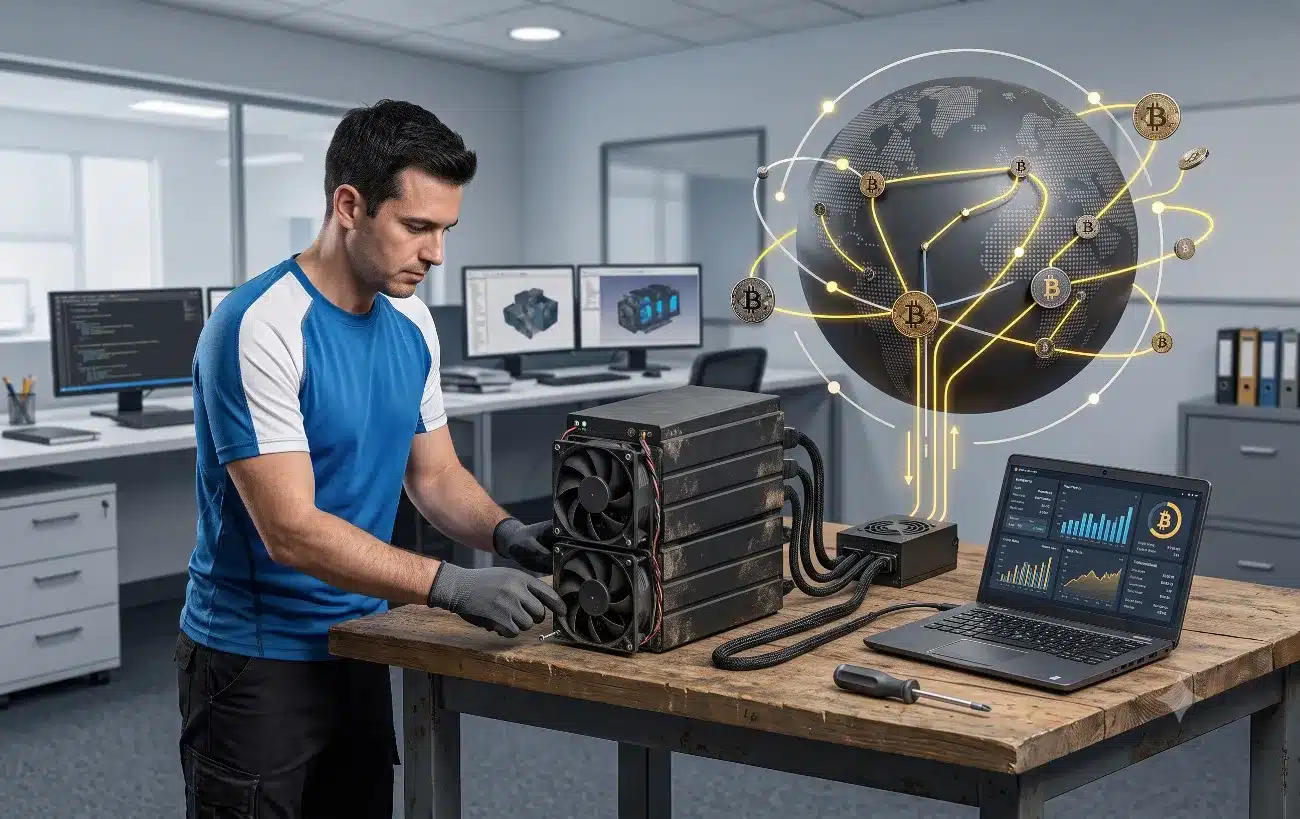
Bitcoin mining is the process of using specialized computing hardware to help secure the Bitcoin network and compete to add new blocks to the blockchain. For beginners, starting requires an ASIC miner, reliable electricity, internet connectivity, suitable cooling, a Bitcoin wallet and a mining pool. Before buying equipment, calculate electricity, hardware and operating costs to determine whether mining fits your budget.
Bitcoin mining can appear complicated when you first encounter terms such as hash rate, SHA-256, mining difficulty, block rewards and mining pools. In reality, the process becomes easier when you break it into practical steps.
This guide explains how to start Bitcoin mining and what you need to consider before putting an ASIC miner into operation.
What Do You Need to Start Bitcoin Mining?
A basic Bitcoin mining setup requires:
- ASIC miner: Specialized hardware designed for Bitcoin’s SHA-256 algorithm.
- Electricity: Mining equipment operates continuously and can consume substantial power.
- Internet connection: A stable network connection allows the miner to communicate with the mining pool.
- Mining pool account: Pools combine miners’ computing power and distribute rewards according to participation.
- Bitcoin wallet: Used to receive mining payouts.
- Cooling and ventilation: ASICs generate considerable heat while operating.
- Suitable electrical infrastructure: Power circuits must safely support the equipment.
Step 1: Learn How Bitcoin Mining Works
Before purchasing hardware, understand the basic mining process.
An ASIC miner repeatedly performs SHA-256 calculations in an attempt to find a valid result. The Bitcoin network adjusts mining difficulty so that blocks continue to be produced at a predictable rate despite changes in total network computing power.
Your mining results depend on factors such as:
- ASIC hash rate
- Power consumption
- Electricity price
- Network difficulty
- Bitcoin price
- Pool fees
- Hardware uptime
Step 2: Choose the Right ASIC Miner
The ASIC is the heart of your Bitcoin mining operation.
When comparing miners, don’t focus only on the highest hash rate. Consider the relationship between computing performance and energy consumption.
Important specifications include:
Hash Rate
Hash rate represents how much computational work a miner can perform. Bitcoin ASICs commonly use TH/s, or terahashes per second.
Power Consumption
Power consumption determines how much electricity the machine uses.
Energy Efficiency
Efficiency is commonly expressed as joules per terahash (J/TH). A lower J/TH generally means the miner requires less energy for the same amount of hashing work.
Cooling Requirements
A high-performance ASIC produces significant heat and requires appropriate airflow or another cooling solution.
Most companies offer ASIC equipment from brands including Antminer and Whatsminer, along with other mining hardware.
Step 3: Calculate Your Mining Costs
Before buying an ASIC, estimate your operating costs.
A simplified electricity calculation is:
Daily electricity cost = Power consumption in kW × 24 × electricity rate
For example, a 3.5 kW miner operating continuously consumes approximately:
3.5 × 24 = 84 kWh per day
Your actual cost depends on your electricity tariff.
You should also account for:
- ASIC purchase price
- Shipping
- Installation
- Electricity
- Cooling
- Pool fees
- Maintenance
- Replacement parts
- Hosting fees, if applicable
Step 4: Set Up Your Mining Environment
ASIC miners need a suitable operating environment.
Before switching on the machine, check:
- Electrical capacity
- Airflow
- Ambient temperature
- Ventilation
- Network connectivity
- Dust levels
- Noise tolerance
- Fire and electrical safety
Home mining can be challenging because ASICs produce both heat and significant noise. Professional hosting can be an alternative when your home lacks suitable infrastructure.
Step 5: Connect Your ASIC Miner
The general setup process is straightforward.
- Position the ASIC in a suitable location.
- Connect the required power cables.
- Connect the miner to your network using Ethernet.
- Power on the machine.
- Locate its IP address.
- Open the miner’s web interface.
- Enter your mining pool information.
- Add your Bitcoin payout address.
- Save the configuration.
- Monitor the miner’s performance.
The exact interface varies by manufacturer and model.
Step 6: Join a Bitcoin Mining Pool
Solo mining means competing independently against the entire Bitcoin mining network.
For most smaller miners, a mining pool is more practical.
A pool combines the hash rate of many participants. Rewards are then distributed according to the pool’s payment method and each miner’s contribution.
When evaluating a pool, consider:
- Pool fee
- Reputation
- Payout threshold
- Payment method
- Server availability
- Monitoring features
Step 7: Monitor Your Bitcoin Miner
Starting the machine is only the beginning.
Regularly monitor:
- Hash rate
- Temperature
- Power consumption
- Hardware errors
- Pool connection
- Uptime
- Accepted and rejected shares
Unexpected drops in hash rate can indicate overheating, network problems, hardware faults or configuration issues.
Home Mining vs Hosted Mining
You don’t necessarily have to operate your ASIC at home.
1. Home Mining
Home mining provides direct control over your hardware but requires suitable:
- Electricity
- Cooling
- Ventilation
- Internet
- Noise management
- Maintenance
2. Hosted Mining
With hosted mining, your ASIC is placed in a professional facility where infrastructure, electricity, cooling and maintenance can be managed by the hosting provider.
Common Mistakes When Starting Bitcoin Mining
Avoid these mistakes when starting Bitcoin mining:
- Buying an ASIC without calculating electricity costs
- Choosing hardware based only on hash rate
- Ignoring cooling requirements
- Underestimating noise
- Forgetting maintenance costs
- Assuming Bitcoin price will remain constant
- Ignoring mining difficulty
- Using unsuitable electrical infrastructure
- Expecting guaranteed profits
Bitcoin mining is an operational business, not simply a machine purchase.
Is Bitcoin Mining Worth Starting?
Bitcoin mining can make sense when you have efficient hardware, competitive energy costs, reliable infrastructure and a realistic understanding of revenue and expenses.
Profitability is never guaranteed because Bitcoin price, mining difficulty, network conditions and operating costs can change.
The best approach is to calculate expected revenue and total operating costs before purchasing equipment.
FAQs
Can a beginner start Bitcoin mining?
Yes. Beginners can start with an ASIC miner, suitable power infrastructure, internet, a Bitcoin wallet and a mining pool.
Can I mine Bitcoin with a normal PC?
Modern Bitcoin mining is dominated by specialized ASIC hardware. A normal computer is generally not competitive for Bitcoin mining.
How much electricity does a Bitcoin miner use?
It depends on the ASIC model. Check its rated power consumption and calculate usage over 24 hours.
Do I need a mining pool?
You can mine solo, but many smaller miners use pools because pooled hash power provides more predictable payouts.
Is Bitcoin mining profitable?
It can be profitable under favorable conditions, but profitability depends on electricity cost, ASIC efficiency, Bitcoin price, mining difficulty and other expenses.
Can I mine Bitcoin at home?
Yes, if your electrical, cooling, ventilation and noise conditions can safely support the ASIC.
What is the most important ASIC specification?
Energy efficiency is one of the most important metrics because electricity is a major ongoing mining expense.