
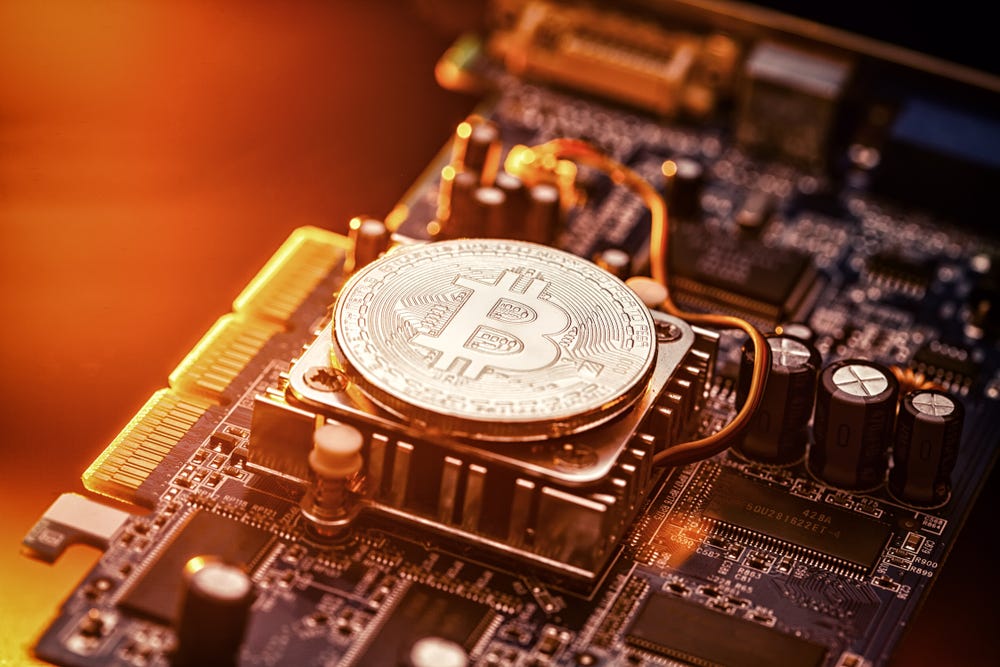
Crypto mining is the process used by certain proof-of-work cryptocurrencies to secure their networks, validate transactions and distribute rewards to participants. Depending on the cryptocurrency, mining may use specialized ASIC hardware or GPUs. Bitcoin is the best-known example, but different cryptocurrencies use different algorithms and therefore require different mining equipment.
This distinction is important: not every cryptocurrency can be mined with a Bitcoin ASIC.
If you’re new to cryptocurrency mining, understanding algorithms, hardware, electricity costs and profitability is more important than simply choosing the most powerful machine.
What Is Crypto Mining?
Crypto mining uses computing resources to perform the work required by a proof-of-work blockchain.
Miners compete to solve cryptographic problems and contribute valid blocks to the network.
In return, miners may receive cryptocurrency rewards according to the rules of the network.
Crypto mining can involve:
- Bitcoin mining
- Litecoin mining
- Dogecoin mining
- Kaspa mining
- Other proof-of-work networks
How Does Cryptocurrency Mining Work?
The basic process is:
- Transactions are broadcast.
- Miners collect eligible transactions.
- A candidate block is created.
- Mining hardware performs computational work.
- A miner finds a valid solution.
- The network verifies the block.
- The blockchain is updated.
- The miner receives the applicable reward.
Proof-of-Work vs Other Consensus Systems
Not every cryptocurrency uses mining.
Proof-of-work networks use computational work to secure consensus.
Other networks may use mechanisms such as proof of stake, where participants contribute through staking rather than performing intensive mining calculations.
Therefore, before purchasing mining hardware, first confirm whether the cryptocurrency you want to mine actually uses a mineable proof-of-work algorithm.
ASIC Mining vs GPU Mining
Two common types of mining hardware are ASICs and GPUs.
1. ASIC Mining
ASICs are specialized circuits designed for particular algorithms.
Advantages include:
- High performance
- Strong algorithm-specific efficiency
- Purpose-built operation
- High hash-rate capability
Disadvantages include:
- Limited algorithm flexibility
- Higher upfront equipment costs for some models
- Heat and noise
- Potential hardware obsolescence
2. GPU Mining
GPUs are more flexible than ASICs.
They can potentially support different algorithms and workloads depending on the software and cryptocurrency.
However, whether GPU mining is economically viable depends heavily on the specific network, GPU efficiency and electricity costs.
What Is a Mining Algorithm?
A mining algorithm defines the computational process used by a blockchain’s proof-of-work system.
For example, Bitcoin uses SHA-256.
This is why an ASIC designed for SHA-256 cannot simply be used to mine every cryptocurrency.
When selecting hardware, always match:
Cryptocurrency → Algorithm → Compatible hardware
What Is a Mining Pool?
A mining pool combines the computational power of multiple miners.
This increases the collective probability of producing valid blocks.
Pool participants receive payouts according to the pool’s payment system and their contributed work.
For beginners, mining pools can make rewards more consistent than relying entirely on solo mining.
What Equipment Is Needed for Crypto Mining?
A basic mining operation may require:
- ASIC or GPU hardware
- Power supply
- Mining software
- Internet connection
- Wallet
- Mining pool account
- Cooling system
- Electrical infrastructure
- Monitoring tools
Large operations may additionally require:
- Power distribution
- Racking
- Network equipment
- Environmental monitoring
- Backup systems
- Dedicated cooling
- Maintenance infrastructure
Crypto Mining Profitability
Mining profitability isn’t determined by cryptocurrency price alone.
Consider:
Hardware cost
The purchase price affects your initial investment.
Electricity cost
Electricity is a recurring expense and can significantly affect margins.
Mining difficulty
Greater network competition can reduce the share of rewards attributable to a given amount of hash power.
Hardware efficiency
More efficient machines can produce more computational work for a given amount of electricity.
Pool fees
Mining pools typically charge fees.
Cooling and infrastructure
Heat management and infrastructure can add significant operating expenses.
Coin price
Cryptocurrency prices can move substantially, changing revenue expectations.
Why Mining Efficiency Matters?
Two miners may produce different results even if they have similar hash rates.
The difference can come from energy consumption.
This is why experienced miners often evaluate:
Hash rate ÷ power consumption
and use efficiency metrics such as J/TH or the relevant unit for the mining algorithm.
Crypto Mining at Home
Home crypto mining may work for small-scale operations, but hardware selection matters.
Before starting, consider:
- Noise
- Heat
- Power availability
- Electricity cost
- Internet reliability
- Ventilation
- Space
- Local requirements
Some compact miners are more suitable for hobbyists than high-power industrial ASICs.
Hosted Crypto Mining
Hosted mining allows customers to operate mining hardware in a professional facility.
This can be useful when you don’t have:
- Suitable electricity
- Cooling
- Space
- Noise tolerance
- Technical maintenance capability
Professional hosting can also make it easier to scale multiple miners.
How to Choose a Crypto Miner?
Follow this sequence:
1. Choose the cryptocurrency
Determine what coin you want to mine.
2. Identify its algorithm
Find out which mining algorithm it uses.
3. Select compatible hardware
Compare ASICs or GPUs designed for that algorithm.
4. Compare efficiency
Look at power consumption relative to hash rate.
5. Calculate electricity costs
Use your actual energy price rather than a generic estimate.
6. Estimate profitability
Include all major operating costs.
7. Check hardware availability and support
Warranty, spare parts and repair support can affect long-term operation.
Common Crypto Mining Mistakes
Beginners often:
- Buy hardware based on price alone
- Ignore electricity costs
- Assume cryptocurrency prices will rise
- Confuse algorithms
- Ignore cooling
- Forget pool fees
- Underestimate maintenance
- Expect guaranteed income
Is Crypto Mining Profitable?
Crypto mining can be profitable under favorable market and operating conditions, but profitability isn’t guaranteed.
The strongest opportunities generally come from combinations of:
- Efficient hardware
- Competitive electricity
- High uptime
- Appropriate cooling
- Strong operational management
- Favorable network conditions
FAQs
What is crypto mining?
Crypto mining is the computational process used by proof-of-work cryptocurrencies to secure their networks and validate blocks.
Is crypto mining the same as Bitcoin mining?
No. Bitcoin mining is one type of crypto mining. Other cryptocurrencies can use different algorithms and hardware.
Can one ASIC mine every cryptocurrency?
No. ASICs are designed for specific algorithms.
Is GPU mining still possible?
GPU mining remains possible for compatible proof-of-work networks, but profitability depends on hardware, electricity and network conditions.
What is the best cryptocurrency to mine?
There is no universally best coin. The answer depends on hardware compatibility, electricity cost, network difficulty, coin price and operating expenses.
Does crypto mining require a mining pool?
No, but pools can provide a more consistent reward structure than solo mining for many miners.
Is crypto mining profitable for beginners?
It can be, but beginners should calculate the complete cost structure before purchasing equipment.